

Trauma Therapy
Creating a Supportive Space for Trauma Therapy at Home
Practical ways to make room for trauma therapy at home, from finding privacy to giving yourself a little breathing room before and after your session.
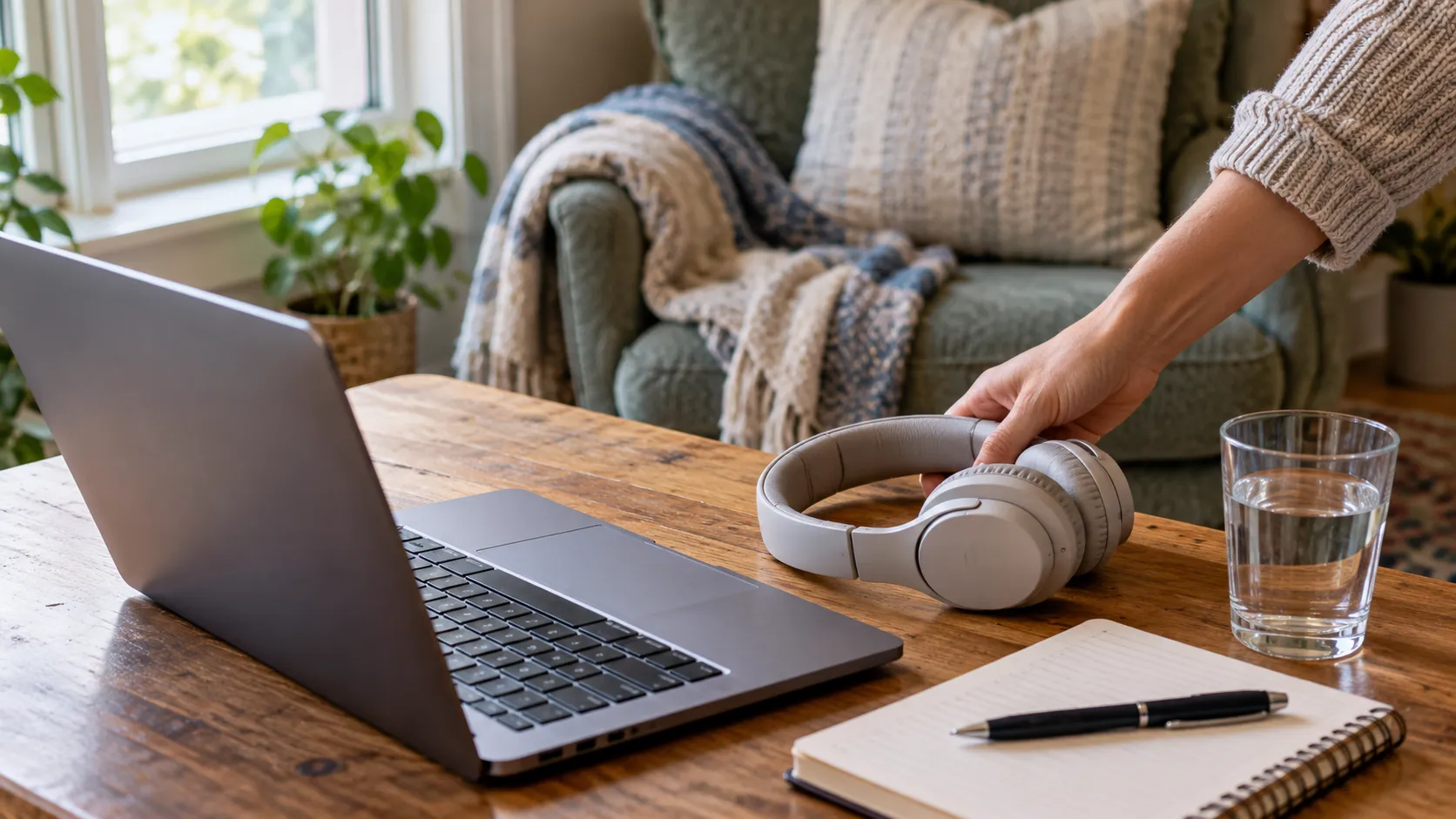
One of the nice things about telehealth is being able to bring the familiar comforts of home into therapy. You can settle into your favorite chair, keep a blanket within reach, or have your dog curled up beside you while you talk. When you are working through difficult experiences, those familiar comforts can make it a little easier to settle in.
At the same time, home is where so much of daily life happens, and it is not always easy to shift from taking care of everything else to giving yourself this time. You may still be thinking about work or listening for someone who may need you, even after the session has begun. A little preparation can help you find some privacy and breathing room, so you have a chance to settle into the conversation.
Creating that space does not require a meditation retreat, a Himalayan salt lamp, or perfectly arranged pillows. It starts with noticing what would help you feel comfortable enough to speak freely and focus on the work you and your therapist are doing together. The suggestions below can help you make those small adjustments in a way that fits your home and your life.
1 Give Yourself a Few Minutes to Arrive
When possible, leave 5 to 15 minutes between whatever you were doing and the start of therapy. Use the restroom, get some water, and give yourself a moment to notice how you are feeling. Take a few slower breaths if that helps. You do not need to make yourself calm before therapy; this is simply a little time to shift your attention toward yourself.
You might look over a note you made during the week or consider the wins and challenges since your last session. And if the day has already gone sideways, you can say so: “I am here, and I am having a hard time switching gears.” That gives your therapist something useful to work with.
2 Choose Somewhere You Can Speak Freely
Privacy matters when you are talking about things you may rarely say out loud. If you are listening for footsteps or editing every sentence because someone might hear you, tell your therapist. A quiet-looking room on a screen does not tell the whole story.
Close the door when possible and let others know when you will be available again. You might say, “I have an appointment until 3. I need privacy, so please wait until I come out unless there is an emergency.” You can ask for privacy without explaining what you plan to discuss.
Headphones keep your therapist’s voice from carrying into the room. A fan or white-noise machine outside the door may help, too, though neither guarantees that others cannot hear you speaking. If privacy is difficult to arrange, bring that up before trauma processing so you and your therapist can work through the options. Planning for privacy is part of telehealth trauma care (Wells et al., 2020).
3 Get Comfortable and Gather What You Need
Choose a seat that lets you feel supported and stay engaged. If being tucked into bed makes you sleepy, try a cozy chair or the couch. Keep your feet supported in a way that works for your body, especially if noticing contact with the floor helps you feel grounded.
Have water, tissues, and anything your therapist has asked you to use within reach. That might include worksheets, a grounding object, or a notebook and pen. A blanket or sweater can help if you get chilly.
A notebook gives you somewhere to put questions and things you want to remember. You do not need to document every thought or turn it into another assignment to perform perfectly.
4 Set Up Your Screen Before the Session
A laptop, desktop, or larger tablet can make it easier to see your therapist and follow visual instructions. For online eye movement desensitization and reprocessing (EMDR) therapy, a larger screen may be especially useful for eye movements. Your therapist can help you choose a setup and method that fit your equipment.
We recommend a larger device instead of a smartphone when possible. A small screen can make shared worksheets or visual exercises harder to follow, especially when more than one person is joining, as in couples or family sessions. If a phone is the device you have, talk with your therapist ahead of time about your options.
Put the device on a stable surface and position the camera so your therapist can see your face and upper body. Before you join:
- Charge the device or plug it in.
- Check your camera and microphone.
- Open the therapy platform a few minutes early.
- Keep a phone nearby in case the video connection fails.
- Headphones can help with sound quality. Wired ones may be useful if your Bluetooth connection tends to wander off at exactly the wrong moment.
A few small adjustments may also help keep your video and sound clear:
- Choose a private spot closer to your Wi-Fi router, the box that sends the wireless internet signal through your home.
- If the connection has been acting up, try restarting your computer. You can also unplug your router’s power cord, wait 1 minute, and plug it back in. Do this before the appointment, allowing several minutes for the internet to reconnect.
- If Wi-Fi is weak in your therapy room, a Wi-Fi extender may help. This small plug-in device picks up your existing wireless signal and helps it reach farther into your home. It needs to be placed where the signal from your router is still strong.
- Another option is to plug your computer directly into your router using an internet cord called an Ethernet cable. This gives your computer a wired connection instead of relying on Wi-Fi and can help when a weak wireless signal interrupts your sessions. Some computers need a small adapter so the cord will fit.
If the picture freezes or voices cut in and out, let your therapist know so you can pause and reconnect. For more help, see SimplePractice’s internet connection guide (Lex, 2025) and Telehealth.HHS.gov’s troubleshooting tips (Health Resources and Services Administration, 2025).
5 Silence the Rest of the Digital World
Turn on Do Not Disturb and silence calls, texts, email alerts, social media notifications, calendar reminders, and smart-device announcements. Close unrelated browser tabs and programs. Trauma therapy asks your brain to stay connected to emotionally important material. A notification announcing that candles are 30% off does not need to participate in that process.
6 Know What to Do if You Are Interrupted
If a door opens, the dog needs to go out, or the video freezes halfway through a sentence, it helps to have talked about what to do ahead of time.
Plan what you will do if someone comes in, a child needs attention, or the connection drops. If possible, arrange help with caregiving during the appointment. Let your therapist know if you are expecting an interruption so you can plan the session with that in mind.
Your therapist should also confirm where you are physically located and discuss how you will reconnect, what to do if you become too distressed to continue by video, and who could help in an emergency. Those plans are part of telebehavioral health guidance (Health Resources and Services Administration, 2024). You can ask your therapist to walk through them with you.
7 Bring Your Basic Needs Into the Picture
It is hard to concentrate when you are hungry, exhausted, or uncomfortable. If you can, eat something before the appointment, drink water, and take care of the small physical needs that are easy to put off during a busy day.
You do not need an ideal wellness routine to participate in therapy. Trauma may be part of why sleep, appetite, or daily routines are difficult in the first place.
Tell your therapist when exhaustion, illness, or medication effects are making it hard to stay present. “I barely slept last night” is useful information. You do not have to spend the session pretending you are more rested than you are.
8 Arrive Sober and Talk Honestly About Coping
There’s a reason we ask you to come to trauma therapy sober. Part of this work involves learning that a reminder of something frightening can be experienced safely, and carrying that learning with you after the session. Alcohol can make that learning harder. Other intoxicating substances can also affect memory and learning, though their effects vary (Bisby et al., 2015; National Center for Injury Prevention and Control, 2024).
If having a drink or using something before therapy feels like the only way to get through it, or if you tend to use something to shut everything off afterward, please tell your therapist. You can say, “I am worried about how I will feel afterward, and this is how I usually cope.” That gives you something important to work on together, including finding a way to approach sessions that feels manageable.
Continue taking prescribed medications as directed, and discuss any concerns with your prescribing provider.
9 Leave a Little Room Afterward
When possible, give yourself some unscheduled time after trauma work before jumping into a meeting, family responsibility, or difficult conversation. You might take a short walk, stretch, eat something, listen to familiar music, or use a grounding exercise you have practiced with your therapist.
Think of it as allowing stirred-up water to settle before carrying the glass into the rest of your day. You do not have to analyze every moment of the session during that time.
If your schedule leaves very little room, tell your therapist what comes next. “I have to pick up my child right after this” is worth knowing as you plan together. You can also discuss whether driving immediately after an intensive session is advisable for you.
10 Let Your Setup Change With You
Your first arrangement may need adjusting. Perhaps the couch makes you sleepy, the office feels too much like work, or your cat believes every EMDR session is an invitation to sit directly on the keyboard.
Tell your therapist what helps and what gets in the way. A different chair, appointment time, or conversation with someone at home might make a meaningful difference. You are allowed to learn what works by trying it.
Making Room for Your Session
Before your next appointment, consider what most needs your attention: somewhere to speak freely, fewer interruptions, or a little time on either side of the session. Bring that practical concern to your therapist. These are details you can work through together.
If someone you live with wants to understand how to support you, sharing this guide can be a place to start. Sometimes support looks like handling school pickup, keeping the television down, or letting a closed door stay closed.
And if you are considering trauma therapy and cannot quite picture how it would fit into your life, we can talk about that, too. At Wisely Wellness, a free 20-minute consultation is a chance to ask questions, tell us what you are hoping for, and explore whether working together feels like a fit. The practical questions are welcome.
References
Bisby, J. A., King, J. A., Sulpizio, V., Degeilh, F., Curran, H. V., & Burgess, N. (2015). Extinction learning is slower, weaker and less context specific after alcohol. Neurobiology of Learning and Memory, 125, 55–62. https://doi.org/10.1016/j.nlm.2015.07.014
Health Resources and Services Administration. (2024, September 18). Creating an emergency plan for telebehavioral health. U.S. Department of Health and Human Services. https://telehealth.hhs.gov/providers/best-practice-guides/telehealth-for-behavioral-health/preparing-patients-for-telebehavioral-health/creating-a-telehealth-emergency-plan
Health Resources and Services Administration. (2025, March 25). What if I’m having trouble using telehealth? U.S. Department of Health and Human Services. https://telehealth.hhs.gov/patients/what-if-im-having-trouble-using-telehealth
Lex. (2025, December 11). Improving your internet connection for SimplePractice. SimplePractice Support. https://support.simplepractice.com/hc/en-us/articles/19032200477837-Improving-your-internet-connection-for-SimplePractice
National Center for Injury Prevention and Control. (2024, February 15). Cannabis and brain health. Centers for Disease Control and Prevention. https://www.cdc.gov/cannabis/health-effects/brain-health.html
Wells, S. Y., Morland, L. A., Wilhite, E. R., Grubbs, K. M., Rauch, S. A. M., Acierno, R., & McLean, C. P. (2020). Delivering prolonged exposure therapy via videoconferencing during the COVID-19 pandemic: An overview of the research and special considerations for providers. Journal of Traumatic Stress, 33(4), 380–390. https://doi.org/10.1002/jts.22573